
Cinema in E Minor
In which the author reviews Altman's "A Wedding" (1978) as if it were a 2020s film, and teasingly reveals details about his own film, inspired by the Altmanesque.

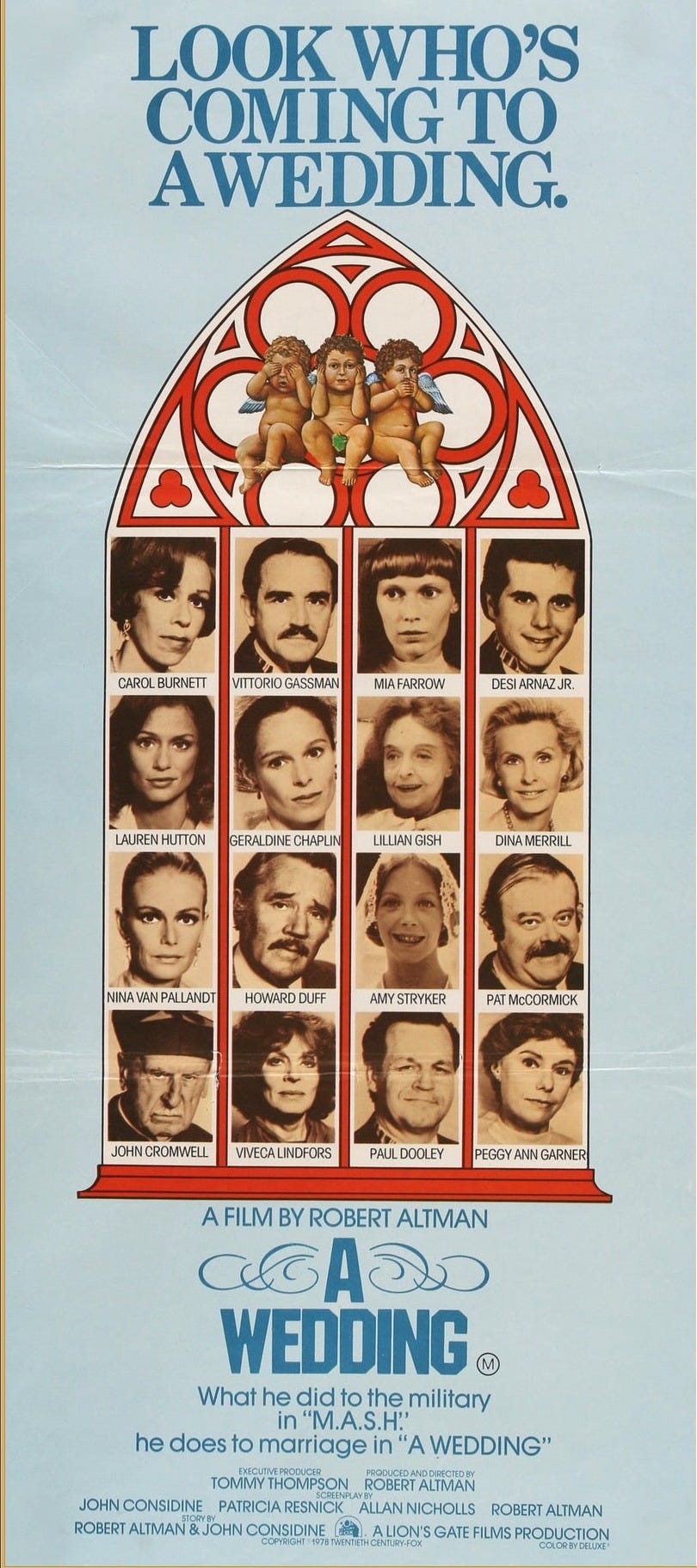
Last night at the Paris, I had another Robert Altman-induced epiphany. This is routine whenever I see a film by Altman, one of my lodestars. But the film, seen at 9.30pm by a wonderfully eclectic, lonely, rained-on group of Altmanheads, was A Wedding (1978). Now: A Wedding is not a film that is typically brought upon as a Great Altman Film, a title reserved to Good Objects like McCabe & Mrs. Miller (1971), The Long Goodbye (1973), Nashville (1975), 3 Women (1977), or Short Cuts (1993). I love those films, but those are Great works — works in the Major key. A film like A Wedding is in a Minor key. And this Minor status makes it of the utmost importance to the 2020s filmmaker/viewer.
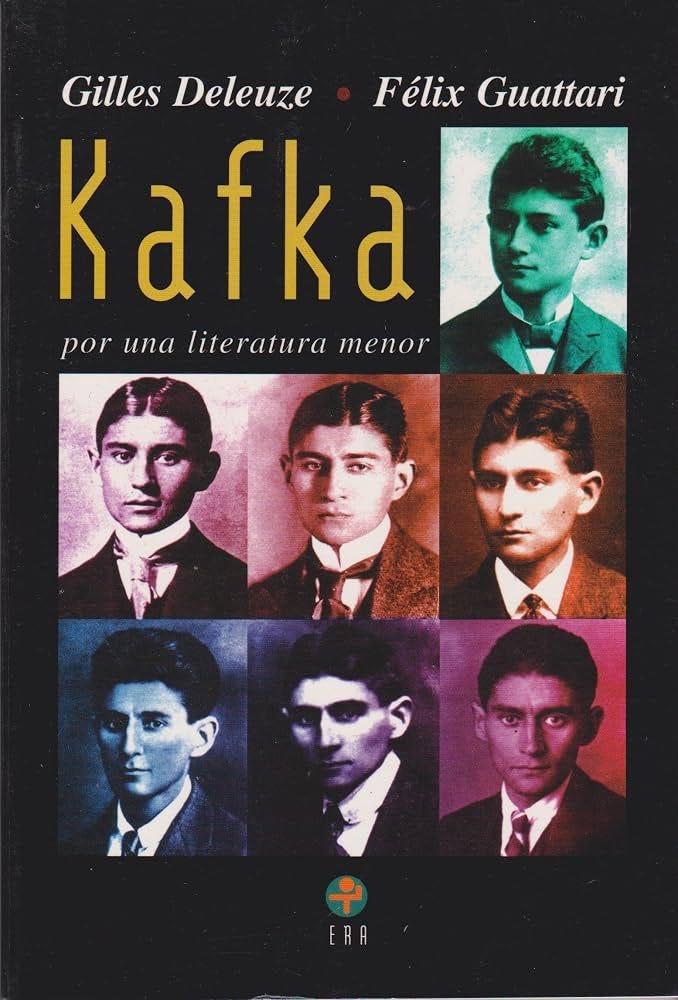
I don’t use “Minor” in its cliché pejorative sense. I use it as Deleuze and Guattari use it when talking about Franz Kafka’s short stories, novels, diaries, and letters as a deeply profound Minor Literature. They write: “A minor literature doesn’t come from a minor language; it is rather that which a minority constructs within a major language.” Kafka was a Prague Jew, yet wrote not in Czech but in German; he grew up thinking in German; he spoke in German; and as an upwardly mobile member of the artists’ middle-class, he wrote in a language that ended up resembling neither the status-quo German nor the localized Czech. He wrote, in other words, for a future that did not exist. He destabilized the “major” language from his position as a Jewish observer of European modernity-in-decline, creating new syntactic and philosophical rules for the language. According to Deleuze and Guattari, Kafka’s “minor” status (in his language, in his status as a Jewish writer, in the ways he wrote against the current of his era’s received ideas) opened up his writing, since everything he wrote about (in his fairy-tale, allegorical, nightmare modes) was political. Furthermore, none of his characters existed in and of themselves — they existed in a polyphony, a roving ensemble-like network of meanings that point the way towards a future yet to exist. A future that has collective, revolutionary potential. Kafka was properly a world pointing to ours.
So it was, and is, with Altman. What was the majority language he spoke through his films? Not English, but Hollywood. Act 1, Act 2, Act 3. Clearly delineated protagonists with whom I can identify, heroes in whose eyes I can see myself reflected, villains at whose capes I can throw tomatoes. Clever lines, clearly delivered, that let me know what’s happening at all times. A fetishized obsession with plot over atmosphere, character, or anything else that might distract from the almighty cat-saved Story.
Sure, Altman “spoke” the language of the majority U.S. film mode — he made films with decent-sized budgets, stars like Robin Williams, Elliott Gould, and Julianne Moore flocked to work with him, and this doesn’t necessarily happen when you want to do films exclusively in the tough, out-there, ultracourageous Wieland-Snow-Ed Owens mode. But while working within the majority language, Altman actively, awesomely resisted it every step of the way. Altman questions Hollywood business in each film he does. And when you watch an AMC picture today, or when you watch A Wedding at the Paris, you can’t help but think, Man, why is nobody reflecting the times like this anymore? Not in a nostalgic way, mind you — I want films to reflect the NOW, not what already’s been done — I’ve no use for pure 100% cane-sugar nostalgia, which can rot the teeth and breed the naughty little reactionary that sits perched in our hearts. To rebel like Altman did, and to make beautiful pictures that move with the polyphonous funky rhythms that he moved with, is still possible. It just requires memory, historical consciousness. Look at films like No Sleep Till, The Secret Agent, Christmas Eve in Miller’s Point, Invention, The Sweet East, or the mammoth La Chimera.
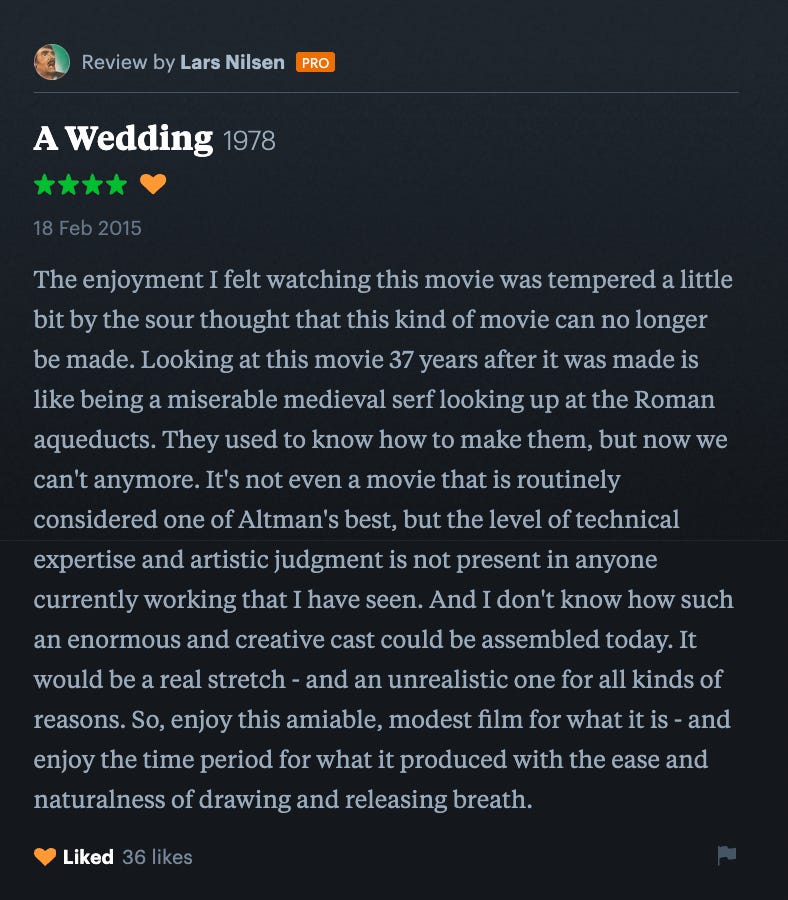
Nowhere in the Altman oeuvre, save for his piece of Minor perfection The Company (2003), is this resistance so stubbornly emphasized than in A Wedding, a film that doesn’t really “work” at all by so many standards of either Hollywood dramaturgy or even anti-Hollywood poetry … and this is precisely why it works, and why it spoke to me last night…
Keep reading with a 7-day free trial
Subscribe to We Love You Get Up to keep reading this post and get 7 days of free access to the full post archives.